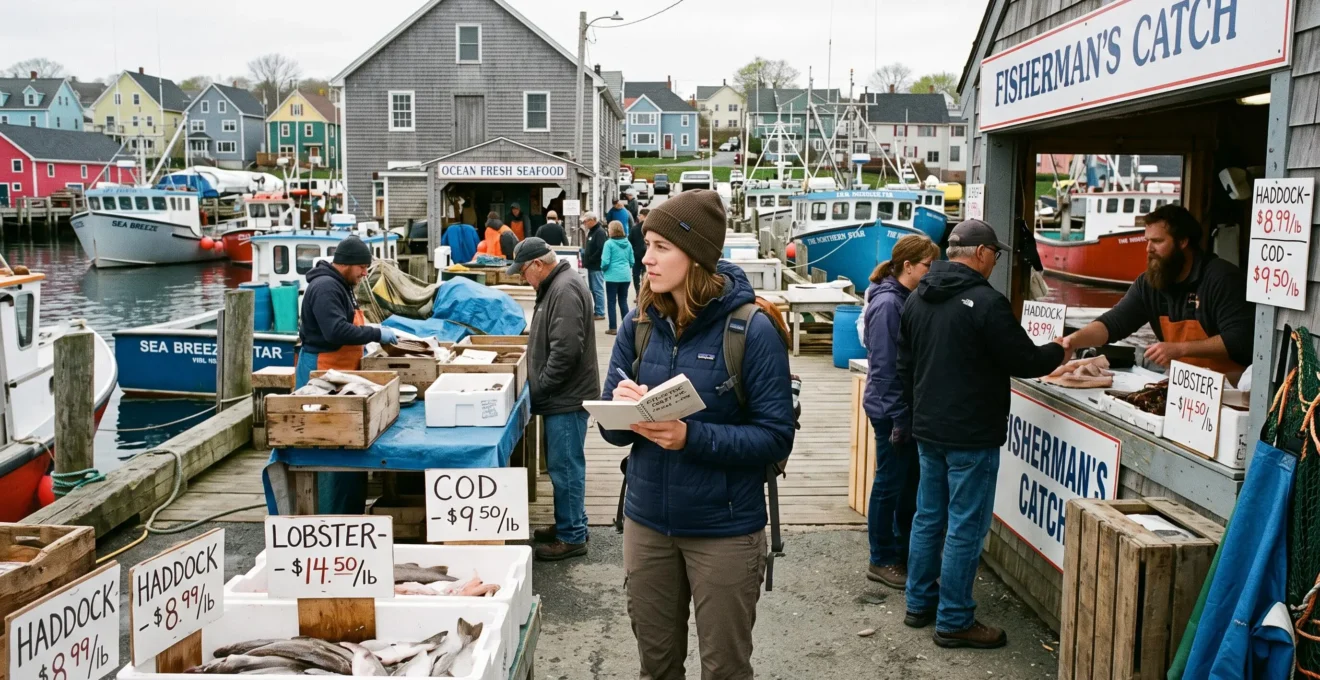
Fresh Atlantic Canadian lobster can be a memorable part of a trip through Nova Scotia, New Brunswick or Prince Edward Island. But the most expensive lobster on a waterfront menu is not necessarily the freshest, and the cheapest live lobster at a roadside shop is not automatically the best value.
The trick is understanding what the price actually includes. Shell condition affects how much meat you get. Location and preparation change what a seller charges. Transport conditions determine whether a promising purchase will still be worth eating when you reach your accommodation.
Before spending money, compare prices in Canadian dollars per pound, ask whether the lobster is hard-shell or soft-shell, confirm what is included, and decide how soon you can cook or eat it. These checks matter more than finding a picturesque harbour.
The same approach works for other Canadian seafood, including wild salmon. A good purchase is one where the origin, condition, usable portion and final cost all make sense.
Buying Atlantic Canadian lobster without overpaying
- Compare live-lobster prices in CAD per pound across local fish shops, authorized wharf sellers and tourist-facing vendors before purchasing.
- Choose hard-shell lobster when meat yield and transport matter; consider soft-shell lobster for a local meal when the price compensates for its lower yield.
- Buy only what you can transport safely and prepare promptly. Cooking charges, taxes, sides and waste can erase an apparent bargain.
- Why Does Lobster Cost So Much More in Some Atlantic Canadian Towns?
- How to Handle Live Lobster in Canada for 6 Hours Without Ruining It?
- What Should You Order in Atlantic Canada: Lobster Roll, Whole Lobster, or Chowder?
- The Pre-Cooked Lobster Mistake That Can Waste $60 $CAD
- When Should You Buy Lobster in Atlantic Canada to Get the Best Selection?
- How to Buy Wild Salmon in Canada Using a 60-Second Fish-Counter Checklist?
- How to Do a 45-Minute Public Market Loop in Canada Without Blowing Your Budget?
- How to Tell if “Wild Salmon” in Canada Is Actually Worth the Price in $CAD?
Why Does Lobster Cost So Much More in Some Atlantic Canadian Towns?
Lobster prices differ between Atlantic Canadian towns because sellers have different purchasing arrangements, operating costs, services and customer demand. A working wharf, independent fish shop and tourist-facing restaurant may offer comparable lobster at different prices. Season and shell condition also matter. The fairest comparison is the final price in Canadian dollars per pound for a comparable product.
A lobster sold near its landing wharf may pass through fewer commercial stages than one delivered to a busy visitor district. However, proximity does not guarantee a lower retail price. Licensed dealers, storage facilities, transportation, staffing, rent and cooking services can all influence what consumers pay.
Start by asking a local fish shop or cooperative for its posted live-lobster price. If direct sales are legally available at a nearby wharf, compare that price too. Then check a more tourist-oriented seafood counter in the same area.
Make sure every quote refers to the same shell stage, approximate size, preparation and unit of weight.
Shell condition is a major comparison point. The Lobster Council of Canada’s hard-shell and soft-shell comparison explains that hard-shell lobster meat yield compared to recently moulted soft-shell lobster contains approximately 20 % more meat than recently moulted soft-shell lobster. This is an industry estimate, not a guaranteed yield for every animal.
Soft-shell lobster may be a sensible purchase if it is less expensive and you intend to eat it locally. Hard-shell lobster can justify a higher price when obtaining more meat or transporting the animal is important.
Consider an explicitly hypothetical comparison: a fish shop quotes CAD $12 per pound for live lobster, while a harbour-front vendor quotes CAD $17 per pound. On a two-pound purchase, the advertised difference is CAD $10 before any other charges. That difference is meaningful only if the lobster’s condition and included services are comparable.
Ask whether cooking is included, whether taxes apply to that particular sale, and whether the quoted weight is live weight or a prepared portion. A cooked meal with sides should not be directly compared with a live-lobster counter price.
The lowest price is useful information, but a fair deal also depends on shell stage, handling, meat yield and whether the lobster will survive your journey.
How to Handle Live Lobster in Canada for 6 Hours Without Ruining It?
A six-hour trip with live lobster can be feasible when the animals are healthy and kept cool, damp and ventilated throughout the journey. Never submerge them in fresh water, pack them against melting freshwater ice or seal them in an airtight container. Six hours is a transport scenario, not a survival guarantee or a substitute for refrigeration.
Before paying, examine the lobster’s responsiveness. A live animal in good condition should react when handled, including moving its limbs or making a noticeable tail movement. Ask the seller when it arrived and whether it has been held under suitable conditions.
A lobster that is completely unresponsive is a poor purchase. Do not assume that a limp animal will recover after being placed in a cooler.
The Lobster Council of Canada’s lobster handling guidance recommends maintaining a cool, damp environment while keeping live lobster away from fresh water. It describes survival outside water under controlled cool, moist conditions, but those conditions cannot be assumed inside a parked or moving vehicle.
For a road trip, ask the seller to prepare the lobster for transport. A ventilated container with damp paper or suitable packing material helps prevent drying. Chilled packs should be separated from the animal to avoid direct freezing contact, while meltwater must be kept away from its gills.
Keep the container out of sunlight and maintain appropriate chilled conditions. A shaded car is not necessarily cool enough, especially when the vehicle is stopped. Avoid repeatedly opening the container or handling the animal unnecessarily.
Five checks before leaving with live lobster
- Confirm responsiveness with the seller and record whether the lobster reacts normally.
- Ask when the animal was received or landed and note the seller’s answer.
- Check that the transport container has ventilation and damp packing material; confirm both before departure.
- Verify that chilling materials cannot leak freshwater or rest directly against the lobster; inspect the packed container.
- Write down the planned arrival and cooking arrangements, including a backup if the journey is delayed.
If the journey becomes substantially longer than planned, do not assume the animal remains viable. Check its condition and obtain appropriate local food-safety guidance if survival or handling is uncertain. If delay is foreseeable before purchase, having the lobster cooked and rapidly chilled by the vendor may be more practical than attempting an extended live transport.
Cooked lobster must remain safely refrigerated. The Lobster Council gives storage guidance of up to three days for cooked lobster in an airtight refrigerated container, but that does not permit several hours of unrefrigerated travel or guarantee quality throughout the period.
When reliable chilling and prompt preparation are not available, enjoying lobster freshly prepared at a local restaurant is often the more sensible choice.
What Should You Order in Atlantic Canada: Lobster Roll, Whole Lobster, or Chowder?
Choose a whole lobster when you want the full eating experience and are comfortable cracking the shell. Order a lobster roll when convenience matters more than maximizing the amount of meat per dollar. Choose chowder for a smaller, potentially less expensive taste of Maritime seafood, but ask how much lobster it actually contains before judging value.
These three dishes have different cost structures. A whole lobster price reflects the animal, cooking and restaurant service. A roll adds bread, dressing, preparation and the convenience of ready-to-eat meat. Chowder combines lobster with other ingredients, so a generous bowl does not necessarily contain a generous lobster portion.
Do not compare them simply by menu price. Instead, consider appetite, available time, included sides and how much actual lobster you are purchasing.
| Decision factor | Lobster roll | Whole cooked lobster | Lobster chowder |
|---|---|---|---|
| Main advantage | Convenient and ready to eat | Complete lobster experience | Accessible seafood meal |
| Main cost consideration | Preparation, bread and service | Shell weight, cooking and sides | Variable lobster content |
| Eating effort | Low | Higher; cracking required | Low |
| Best match | Travellers with limited time | Hands-on seafood experience | Smaller appetite or mixed menu |
Meat yield is particularly important when interpreting whole-lobster prices. The Lobster Council of Canada estimates that a 1.5–pound hard-shell lobster produces approximately 1⅓ cups of cooked meat. This is not a universal conversion factor, and it should not be applied directly to every one-pound lobster.
Shell stage, individual condition and extraction technique affect the result. The relevant comparison is therefore edible meat and enjoyment, not gross lobster weight alone.
Regional preparation styles also deserve attention. You may encounter chilled lobster rolls dressed with mayonnaise, warm butter-based preparations, and chowders with different proportions of cream, potato and seafood. Rather than assuming one version is standard across the Maritimes, ask what the restaurant makes most often and what the dish includes.
For a whole lobster listed at market price, ask two questions before ordering: “What is today’s price?” and “What is the approximate total weight of the lobster being served?” Then confirm whether cooking, sides and applicable taxes are included.
A tourist-facing menu can look reasonably priced until these details are added. A locally popular restaurant may offer better value, but popularity and authenticity alone are not price evidence.
Once you know which format suits your meal, the next question is whether buying an already-cooked lobster offers enough convenience to justify its price and storage limitations.
The Pre-Cooked Lobster Mistake That Can Waste $60 $CAD
Pre-cooked lobster becomes poor value when travellers pay for preparation, transport it without adequate chilling, reheat it excessively or buy more meat than they can use. A CAD $60 loss is an illustrative possibility, not a documented average. The sensible decision depends on the final purchase cost, food safety, intended meal and amount ultimately eaten.
Cooking ahead is not inherently a mistake. It can be the right choice for a picnic, a cold lobster salad or a meal where cooking facilities are unavailable. The problem arises when the purchase plan does not match how the lobster will be served.
Imagine a hypothetical traveller purchasing two cooked lobsters for CAD $90, with an alternative live purchase and self-cooking plan costing CAD $60. That produces an initial CAD $30 difference. If poor handling causes the traveller to discard food worth another hypothetical CAD $30, the combined economic exposure reaches CAD $60.
This is a teaching example, not an observed Canadian market price or a typical loss. Recalculate it using the actual quotes and circumstances of your purchase.
Hypothetical example: Calculate the true cost of cooked lobster
Cooked purchase: CAD $90. Comparable live purchase plus preparation costs: CAD $60. Additional purchased food discarded because it cannot be safely used: CAD $30.
Illustrative difference: (CAD $90 − CAD $60) + CAD $30 = CAD $60. This figure depends entirely on the assumed prices and loss; it does not represent a verified consumer outcome.
Before buying, ask when the lobster was cooked, how it was chilled and how it has been stored. The shell should have the expected cooked appearance, and there should be no unusual or offensive odour. These observations are useful screening checks, but appearance and smell cannot establish food safety.
A tightly curled tail is not a reliable freshness guarantee for cooked lobster. The cooking and refrigeration history matters more than any single visual sign. If the seller cannot explain the storage conditions, choose another option.
Reheating can reduce tenderness if the lobster is overcooked again, but it does not automatically destroy its value. Gentle reheating may work when the product has been stored safely. Eating it cold can eliminate the risk of additional overcooking.
Unused shells can sometimes contribute flavour to stock, provided they have been handled safely. Tomalley is not necessary for enjoying the lobster, and it should not be treated as an automatic source of recoverable food value.
The easiest way to avoid this problem is to plan the meal before paying: buy live for prompt cooking when practical, or buy cooked when proper refrigeration and a suitable serving plan are already arranged.
When Should You Buy Lobster in Atlantic Canada to Get the Best Selection?
The best buying period depends on the Lobster Fishing Area, not a single Atlantic Canadian calendar. Nova Scotia, New Brunswick and Prince Edward Island have regionally managed fisheries with different opening periods. Check the applicable local season, then ask sellers about current availability, shell condition and incoming stock. An open season can improve buying opportunities without guaranteeing lower retail prices.
Atlantic Canada’s lobster industry does not operate on one coast-wide opening date. Fishing effort and permitted seasons are organized geographically, with decisions applying to particular management areas.
Fisheries and Oceans Canada’s 2026 fisheries management decisions provide official regional information, including decisions for different Maritime Lobster Fishing Areas. The index is a starting point for checking relevant fishery decisions, not a single consumer purchasing calendar.
For example, southwest Nova Scotia and southern Gulf fishing areas should not be assumed to have identical landing schedules. Confirm the local area and current season for the town you intend to visit.
Season also influences the lobster’s physical condition. Recently moulted soft-shell animals have more room inside their shells and generally yield less meat than hard-shell animals. A lower advertised soft-shell price may make sense for immediate local consumption, but should be evaluated against yield and handling needs.
Hard-shell lobster can be a better choice when you are planning a longer journey or paying primarily for meat yield, although the outcome still depends on individual condition and adequate transport arrangements.
Within a particular week, the most useful tactic is to ask local shops when their next deliveries are expected. Fishing activity, weather, unloading arrangements and dealer turnover can change what is available on a given day.
Weekdays may offer opportunities at working fish shops, but there is no reliable basis for claiming that they are universally cheaper or fresher than weekends. Likewise, end-of-day discounts and holiday price increases should be treated as possibilities to check locally, not fixed market rules.
If your itinerary is flexible, compare a busy visitor destination with a nearby town that has established seafood retailers. Ask each seller for the same shell condition and weight category, then evaluate availability and total purchase price.
The best selection is the one that matches your actual visit: healthy lobster, a suitable shell stage, transparent pricing and a realistic plan for getting it safely onto the table.
How to Buy Wild Salmon in Canada Using a 60-Second Fish-Counter Checklist?
At a Canadian fish counter, use one minute to check the salmon’s species, stated origin, handling history, visible condition and price. Look for firm flesh without obvious deterioration, and inspect eyes and gills when buying a whole fish. Then ask whether it was previously frozen and where it came from. No visual inspection alone proves freshness or wild origin.
The first mistake is treating every product labelled “salmon” as equivalent. Sockeye, coho and chinook are different Pacific salmon species, while Atlantic salmon sold at Canadian counters may be farm-raised. Species, harvest method, processing and supply conditions can all influence price.
Use a simple counter sequence. First, read the product name and confirm the species. Second, ask where the fish was harvested or produced. Third, establish whether it is sold fresh, frozen or previously frozen. Fourth, examine its visible condition. Finally, compare the price in CAD per pound with similar products.
The Canadian Food Inspection Agency‘s fish labelling requirements explain the importance of species-specific names for Pacific salmon and the requirement to identify fish previously frozen and thawed before retail sale under the applicable rules.
These labels help consumers compare products, but a species name alone does not verify whether an individual fish was wild-caught. If wild origin drives the price premium, ask the seller for the supporting product information.
For a whole fish, clear eyes and healthy-looking gills can contribute to a condition check. For fillets, look for intact surfaces, firm texture and an absence of visibly dried or discoloured edges. These are screening observations rather than proof of microbiological safety or precise time since harvest.
Also consider frozen salmon. Properly handled frozen fish may retain excellent quality, while an unfrozen-looking retail display does not tell you how long the fish spent in transit. Neither form is automatically fresher, safer or cheaper without product-specific information.
When a counter offers several salmon options, calculate their prices using the same unit. An attractive price per package may conceal a higher price per pound, particularly when package weights differ.
This transfers the central lobster-buying skill to another product: establish what is being sold, verify the relevant claims and judge the price against the edible product you will receive.
How to Do a 45-Minute Public Market Loop in Canada Without Blowing Your Budget?
Spend the first part of a 45-minute market visit comparing seafood stalls without buying, then return to the strongest options with a fixed CAD budget. Record prices per pound, distinguish live from cooked products, and ask about origin and handling. This prevents an expensive entrance-stall impulse purchase while leaving time to buy and arrange suitable transport.
Public markets are especially useful when multiple vendors sell comparable seafood. They are less useful for price benchmarking when only one stall carries lobster, so do not force a comparison that the market cannot support.
Begin by deciding how much of your total food budget can go toward lobster or salmon. Keep preparation, cooking, cold transport and any applicable charges inside that limit.
Use this practical 45-minute route:
- Minutes 0–10: Walk the available stalls. Note which vendors sell live lobster, cooked lobster, salmon or prepared seafood. Do not purchase yet.
- Minutes 10–20: Compare up to three suitable vendors, where available. Record CAD-per-pound prices, shell condition, species and stated origin.
- Minutes 20–30: Ask the best candidates about current stock, preparation costs, packaging and whether they sell directly from a producer or through a dealer.
- Minutes 30–40: Revisit your preferred stall. Confirm the final total and whether the product fits your meal and transport plans.
- Minutes 40–45: Complete the purchase, obtain handling instructions and place perishable seafood into appropriate chilled storage.
Producer-direct selling can sometimes reduce intermediate costs, but a producer’s presence does not guarantee the lowest price. A specialized fish retailer may offer more suitable packing, cooking or product selection for your needs.
Late-session discounts are another possibility, not a dependable rule. Sellers may have already sold their best stock or may maintain fixed prices throughout the day. Do not sacrifice product condition or food safety merely to chase a markdown.
The main advantage of the market loop is that it turns an emotional purchase into a comparable decision. You know what lobster type you are buying, what the listed price means, which services are included and how you will use the product.
Once the market habit is established, it becomes easier to recognize when a higher-priced product genuinely offers something extra. This is particularly useful for wild salmon, where species and origin claims can influence the advertised premium.
Key takeaways before paying a seafood premium
- A low price is meaningful only when weight, preparation, product condition and usable yield are comparable.
- A vendor’s specific answers about origin, handling and product identity are more valuable than an attractive display or broad quality claim.
- Reserve premium spending for differences that matter to your meal, whether that means more usable lobster meat, a preferred salmon species or convenient preparation.
How to Tell if “Wild Salmon” in Canada Is Actually Worth the Price in $CAD?
Wild salmon is worth paying more for when its species and origin are credible, its condition meets your expectations, and the price premium delivers something you genuinely value. Compare equivalent products in CAD per pound, check whether the fish was previously frozen, and consider how you will cook it. A “wild” label alone does not justify the highest price.
Start with identity. Ask the seller to identify the salmon species rather than accepting “wild Pacific salmon” as the full description. Different species have different culinary characteristics, availability and market values.
Next, investigate the harvest claim. Ask whether the fish was wild-caught, where it originated and whether supporting supplier information is available. A confident answer is useful, but documentation provides stronger assurance than a general verbal claim.
Finally, assess condition and value. A wild salmon fillet may command a premium because of species, season, supply and buyer demand. That premium is not automatically justified when the fish is poorly handled, its provenance cannot be established or another product would satisfy your intended recipe just as well.
Use a consistent three-part decision:
- Verified product: The species, stated origin and harvest method are clear enough to understand what you are purchasing.
- Acceptable condition: The display, packaging, refrigeration and available handling information are consistent with a product you can safely store and prepare.
- Reasonable premium: The total CAD price is acceptable relative to comparable alternatives and the qualities you personally value.
Failing one of these checks does not prove that the fish is poor quality. It means the available information may not support paying extra for that particular claim.
Farmed Atlantic salmon is a legitimate comparison for some meals. In chowder, strongly seasoned dishes or recipes where the salmon is one ingredient among several, paying a premium for wild fish may bring little additional value to the person eating it.
For a simple roasted fillet where the fish’s flavour and texture are central, a particular wild species may be worth the extra cost. The outcome depends on personal preference, freshness, preparation and the individual product; neither wild nor farmed salmon is universally superior for every use.
Remember that frozen and previously frozen products are not inherently inferior. When you need flexibility during a road trip, appropriately stored frozen seafood may suit your schedule better than buying a counter fillet you cannot refrigerate promptly.
The decision rule is the same one used for lobster: compare equivalent prices, ask one specific question that tests the seller’s claim, and only pay more when the additional benefit is meaningful and usable.
Before your next market stop, set a CAD spending limit, decide how the seafood will be prepared, and obtain comparable quotes. Choose the product whose identity, condition, portion and total price fit that plan—not simply the one with the most appealing label.
Can tourists buy lobster directly from fishermen in Atlantic Canada?
Direct sales may be available through authorized sellers in some locations, but access and applicable requirements vary. Never assume that every working fishing wharf operates as a public retail market. Ask locally where consumers can legally purchase lobster and compare those offers with established fish shops.
Is soft-shell lobster a bad choice for travellers?
Not necessarily. Soft-shell lobster has recently moulted and generally yields less meat than hard-shell lobster. It may be appealing when offered at a suitable price and eaten locally soon after purchase. For longer transport or when meat yield is a priority, hard-shell lobster may be the more practical option.
Should lobster be placed directly on ice during a road trip?
Live lobster should not be exposed to freshwater ice or meltwater. Maintain cool, moist, ventilated conditions and separate the animal from chilling materials that could freeze it or leak freshwater onto its gills. Ask the seller to pack it appropriately and ensure you can maintain chilled conditions until preparation.
Is lobster always cheaper near the fishing docks?
No. A working-wharf location may reduce some distribution costs, but final retail prices depend on the seller, availability, shell condition, services and local demand. Compare at least two suitable offers using the same live-weight unit and ask about any additional charges.
Can travellers bring purchased lobster or salmon across Canadian provincial borders?
Do not assume that all seafood movements are governed by identical rules. Requirements can depend on the product, its origin, whether it was commercially purchased or personally harvested, and the destination. Keep your purchase information and check applicable provincial and federal requirements when transporting seafood, particularly when crossing into another country.