Blog
Canada is one of those rare destinations where nature and everyday life blend almost seamlessly. From the turquoise lakes of the Rocky Mountains to the lighthouses of the Atlantic coast, from vibrant cities like Montréal and Vancouver to quiet villages in the Maritimes, the country offers an extraordinary range of leisure and outdoor experiences. Whether you are a visitor planning your first trip or a resident looking to make the most of your weekends, this pillar page brings together the essentials of tourism, outdoor activities and the Canadian art of living in one place.
The goal of this page is simple: help you understand what Canada has to offer, when to do it, and how to prepare for it. Each section connects to deeper topics you can explore further, so you can build your own itinerary or simply find inspiration for your next adventure.
Why Canada Is a Paradise for Leisure and Outdoor Enthusiasts
Canada is the second-largest country in the world, and the vast majority of its territory remains wilderness. More than 48 national parks and hundreds of provincial parks protect ecosystems as diverse as boreal forests, alpine tundra, prairies, glaciers and coastal rainforests. This natural wealth translates into an almost unlimited playground: hiking, paddling, skiing, wildlife watching, fishing, camping and stargazing are all accessible within a few hours of most major cities.
What makes Canada truly distinctive, however, is the culture that surrounds these activities. Outdoor life is not reserved for elite athletes; it is part of the national identity. Families own canoes the way others own bicycles, cottages (or cottages in Ontario, chalets in Quebec) are a summer institution, and the long weekends of Victoria Day or Labour Day are traditionally spent in nature. This accessibility means beginners feel welcome, and locals are generally happy to share tips about trails, launches and hidden spots.
The Four Seasons: Planning Activities Around Canada’s Climate
Canada’s climate shapes its leisure calendar more than anything else. Understanding the rhythm of the seasons is the first step toward planning a satisfying trip or a year-round lifestyle.
Winter: Embracing the Cold
Winter in Canada is long, snowy and, in many regions, genuinely cold, with temperatures in the Prairies and Northern regions regularly dropping well below freezing. Rather than hibernating, Canadians have turned winter into a playground:
- Downhill skiing and snowboarding at world-class resorts such as Whistler Blackcomb in British Columbia, Banff Sunshine and Lake Louise in Alberta, Mont-Tremblant in Quebec, and Le Massif near Quebec City.
- Cross-country skiing and snowshoeing, which are affordable, low-impact and available in nearly every urban park.
- Ice skating, from the Rideau Canal Skateway in Ottawa, one of the largest skating rinks in the world when conditions allow, to outdoor rinks in every neighbourhood.
- Winter festivals such as Quebec City’s Carnaval, which celebrate the season with ice sculptures, canoe races on the frozen St. Lawrence and traditional food.
- Dog sledding and ice fishing, particularly popular in Quebec, Manitoba and the Northern territories.
The key to enjoying a Canadian winter is dressing properly. The local saying there is no bad weather, only bad clothing holds true: layered clothing, insulated boots and quality mittens transform a cold day into a pleasant one.
Summer: Peak Season for the Great Outdoors
Summer, roughly from June to September depending on the region, is when Canada is at its most alive. National parks see their highest visitation, lakes warm up enough for swimming, and the days are remarkably long, especially in the northern latitudes where twilight can last until very late in the evening.
- Hiking in iconic locations such as the West Coast Trail on Vancouver Island, the Skyline Trail in Cape Breton Highlands, or the alpine trails around Lake Louise and Moraine Lake.
- Canoeing and kayaking, the quintessential Canadian pastime, whether on quiet lakes in Algonquin Park, on the Bow River in Calgary, or along the coastlines of the Atlantic provinces.
- Camping, from serviced campgrounds with showers and interpretive programs to backcountry sites reachable only by canoe or on foot.
- Wildlife viewing: whales in Tadoussac on the St. Lawrence, grizzly bears in the Great Bear Rainforest, puffins in Newfoundland, and bison in Elk Island National Park.
- Urban festivals, since summer is also when cities come alive with events like the Montréal International Jazz Festival, the Calgary Stampede and dozens of local farmers’ markets.
A practical note: summer is high season. Popular campgrounds in Banff, Jasper and provincial parks like Algonquin open reservations months in advance, sometimes the very morning bookings open. Planning ahead is the single most useful habit for summer travel in Canada.
Spring and Fall: The Secret Shoulder Seasons
Spring and autumn are often overlooked, yet they offer some of the most rewarding experiences. Spring brings map syrup season in Quebec and Ontario, with sugar shacks (cabanes à sucre) serving traditional meals as the sap flows. Waterfalls are at their most powerful with the snowmelt, and trails are quiet.
Fall is arguably Canada’s most photogenic season. The fall foliage in Quebec, Ontario and the Atlantic provinces draws visitors from around the world, particularly along scenic routes such as Ontario’s Muskoka region, the Laurentians and New Brunswick’s Acadian coastline. Temperatures remain comfortable for hiking, insects have disappeared, and accommodation is easier to find than in summer.
Iconic Destinations and Regions to Discover
Canada is too large to be seen in one trip, so it helps to think in regions, each with its own personality and signature activities.
- British Columbia and the Rockies: mountains, ocean and rainforest in a single province. Vancouver offers beaches and ski slopes within city limits, while Banff and Jasper are the heart of classic Canadian mountain scenery.
- The Prairies (Alberta, Saskatchewan, Manitoba): big skies, rolling grasslands, and unexpected gems like Grasslands National Park and the aurora borealis over Churchill.
- Ontario: a mix of cosmopolitan Toronto, the capital Ottawa, and thousands of lakes ideal for canoe tripping, especially in Algonquin and Killarney.
- Quebec: European charm in Old Québec and Montréal, the Laurentians and Eastern Townships for four-season recreation, and the Gaspé Peninsula for dramatic coastal hiking at Percé.
- The Atlantic Provinces: Nova Scotia’s Cabot Trail, Prince Edward Island’s red-sand beaches and literary heritage, Newfoundland’s icebergs and Gros Morne National Park, a UNESCO World Heritage Site.
- The North (Yukon, Northwest Territories, Nunavut): midnight sun in summer, northern lights in winter, and genuine wilderness for experienced adventurers.
For a first visit, many travellers combine a city (Vancouver, Toronto or Montréal) with a nearby natural destination (Whistler, Niagara-on-the-Lake or the Eastern Townships). For a deeper immersion, focusing on one or two provinces yields far richer experiences than trying to cross the entire country, which would require weeks of driving.
Urban Lifestyle: Canadian Cities as Leisure Destinations
The Canadian art of living is not limited to wilderness. Canadian cities consistently rank among the most livable in the world, and they offer their own leisure culture worth exploring.
Vancouver combines mountains and ocean with a mild climate, making cycling along the seawall in Stanley Park a year-round activity. Toronto offers island escapes just a ferry ride away, a thriving food scene reflecting its multicultural population, and lakefront trails. Montréal is famous for its festivals, terraces and bike-friendly streets, while Quebec City preserves a historic European atmosphere unique in North America. Smaller cities like Halifax, Victoria, Winnipeg and Calgary each offer their own mix of museums, craft breweries, live music and easy access to nature.
A distinctly Canadian urban habit is the patio culture: as soon as warm weather arrives, sidewalks fill with terraces where people gather for a local craft beer or a coffee. Food itself is part of the experience, from poutine and Montreal-style bagels to fresh Pacific salmon, butter tarts and Nanaimo bars.
Practical Tips for Planning Your Canadian Leisure Experience
Good preparation makes the difference between a stressful trip and a smooth one. Here is a reliable process to follow:
- Define your season and region. Decide whether you want beaches and hiking (summer), colours and comfort (fall), snow sports (winter) or quiet trails and map syrup (spring).
- Check distances and travel times. Canada is vast; a map can be deceiving. Driving from Toronto to Montréal takes about five hours, and crossing the country takes nearly a week of driving.
- Book accommodations and campsites early. National park campsites, popular lodges and well-known trails often require reservations released months ahead.
- Learn the basic rules of the outdoors. Park passes (such as the Parks Canada Discovery Pass), campfire regulations, bear safety practices, and Leave No Trace principles apply nationwide.
- Prepare for weather variability. Even in summer, mountain weather changes fast. Pack layers, rain gear and, in remote areas, a way to communicate offline.
- Consider travel insurance and park permits. Medical care is excellent but costly for uninsured visitors, and certain activities require specific permits or guiding.
A useful analogy: think of planning a Canadian trip like planning a canoe route. You check the water levels (weather and season), pack what you need and nothing more (regional focus), and set a rhythm that leaves room for the unexpected (free days for spontaneous discoveries). Travelers who respect the scale of the country and the pace of its seasons consistently report the most satisfying experiences.
Safety and Responsible Enjoyment of Nature
Canada’s wilderness is accessible but real. A few habits keep both you and the environment safe:
- Tell someone your itinerary before heading into remote areas, especially for backcountry hiking or paddling.
- Carry the ten essentials: navigation, sun protection, insulation, illumination, first aid, fire, repair kit, nutrition, hydration and emergency shelter.
- Store food properly in bear country using hang poles, bear canisters or food lockers provided at many campsites.
- Respect wildlife distances: never feed animals, and keep at least the recommended distances from bears, moose and marine mammals.
- Stay on marked trails and pack out everything you pack in, preserving the landscapes that make Canada special.
Frequently Asked Questions
When is the best time to visit Canada?
It depends entirely on what you want to do. For hiking, camping and city life, summer is ideal. For winter sports and northern lights, plan between December and March. For foliage and comfortable temperatures, fall is hard to beat. There is no single best season, only the right season for your chosen activity.
Do I need a car to explore Canada?
In major cities, public transit is efficient and car-free travel is feasible. However, to access national parks, coastal routes and rural regions, renting a car is strongly recommended. A few destinations, like Banff and Jasper, are also served by shuttle and bus services from nearby cities.
Are Canada’s national parks beginner-friendly?
Absolutely. Parks Canada maintains a wide range of facilities, from easy interpretive boardwalks to challenging backcountry routes, along with visitor centres where staff provide maps, safety advice and activity recommendations. Beginners can enjoy spectacular scenery without technical experience.
Is Canada expensive for leisure travel?
Costs vary by region and season. Accommodation in remote tourist hubs and major cities can be significant, but options like camping, park passes with good value, self-catering rentals and free urban activities keep trips affordable. Travelling in shoulder seasons also reduces costs considerably.
Exploring Further
This page serves as the starting point of our Blog section. From here, you can dive into dedicated articles on specific regions, seasonal activities, trip planning checklists, gear advice and the cultural traditions that make Canadian life unique. Take your time, choose the angle that matches your interests, and build the Canadian experience that suits you, whether that means a sunrise canoe on a silent lake, a ski weekend in the Rockies, or a slow summer afternoon on a city terrace with the mountains on the horizon.
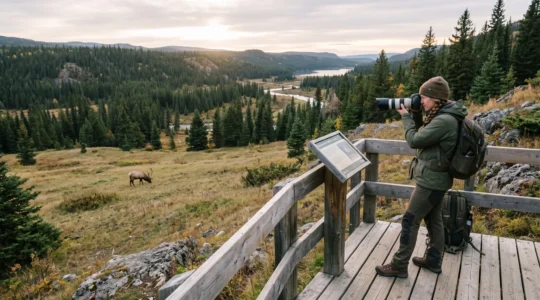
What Does “Conservation Culture” Mean in Canada When You’re Just Visiting for a Week ?
In Canada, conservation culture is something visitors participate in through everyday decisions. It means respecting wildlife, staying on designated trails, managing food and waste carefully, and following the rules of whichever protected area you enter. You do not need to…
Read more