Canadian Destinations
Canada is the second-largest country in the world, and its sheer scale is the first thing every traveller needs to understand. Distances that look short on a map can mean a full day of driving. That is not a warning against visiting — it is the key to planning a rewarding trip. Canadian destinations are less about checking boxes and more about choosing a region that matches the experience you want, whether that is dramatic coastal scenery, mountain hiking, vibrant city culture, or quiet lakeside relaxation.
This pillar page serves as your starting point for everything in our Canadian Destinations category. Here you will find an overview of the major regions, the signature experiences each one offers, advice on when to go, and practical planning tips that apply almost anywhere in the country. From here, deeper articles on individual destinations will help you refine your itinerary.
Understanding Canada’s Regions
Canada is often described as a country of regions rather than a single travel experience. Each region has its own landscape, climate, food culture, and pace of life. Thinking regionally is the smartest way to build a trip, because it keeps driving distances reasonable and lets you sink into a place rather than rush through it.
Atlantic Canada: Coasts and Character
The four Atlantic provinces — Nova Scotia, New Brunswick, Prince Edward Island, and Newfoundland and Labrador — offer some of the most welcoming and affordable travel in the country. Expect lighthouses, seafood shacks, colourful fishing villages, and a strong musical tradition. The Cabot Trail in Cape Breton is one of the most celebrated road trips in North America, while Gros Morne National Park in Newfoundland showcases fjords and barren plateaus shaped by ancient geology.
The Atlantic is ideal for travellers who prefer a slower rhythm, road trips with frequent stops, and cultural immersion over adrenaline. Summer and early autumn are the prime seasons.
Quebec: European Flavour in North America
Quebec blends French-Canadian culture with landscapes ranging from the St. Lawrence River to the boreal north. Montreal offers festivals, food, and neighbourhoods worth wandering on foot, while Quebec City is the only fortified city north of Mexico, its Old Town feeling remarkably European. Beyond the cities, regions like Charlevoix and Gaspésie deliver coastal drives, whale watching, and excellent hiking.
Ontario: Cities, Lakes, and Iconic Sights
Ontario is Canada’s most populous province and home to Toronto, Ottawa, and Niagara Falls. It also holds surprising natural diversity: Algonquin Provincial Park is a canoeing and camping classic, and the Thousand Islands region along the St. Lawrence offers boat tours and waterfront towns. For first-time visitors, Ontario pairs easily with Quebec for a combined city-and-nature itinerary.
The Prairies: Big Skies and Quiet Beauty
Manitoba, Saskatchewan, and Alberta’s plains are often overlooked, which is precisely their appeal. Northern lights viewing in Churchill, Manitoba is world-class; grasslands national parks offer dark skies and unique wildlife; and the prairie cities of Winnipeg and Saskatoon have thriving arts and food scenes. This is the region for travellers seeking space, silence, and something genuinely different.
The Canadian Rockies and British Columbia
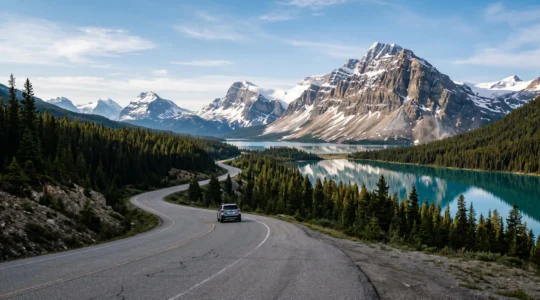
This is the postcard Canada: turquoise lakes, glacier-capped peaks, and wildlife along the roadside. Banff and Jasper national parks anchor the Rockies, while Vancouver and Victoria offer a mild coastal climate, ocean-to-mountain scenery, and easy access to skiing, sea kayaking, and rainforest hiking. The drive between Vancouver and the Rockies, whether via the Sea-to-Sky Highway or the Yellowhead route, is an attraction in itself.
Practical note: parks in this region are extremely popular in summer. Reservations for campgrounds, shuttles, and even some lake access are now standard practice, and booking well in advance is part of the experience rather than an optional extra.
The North: Yukon, Northwest Territories, and Nunavut
Canada’s three northern territories cover a vast share of the country’s landmass and deliver its most remote adventures. Dawson City in the Yukon preserves Klondike Gold Rush history, the Dempster Highway crosses the Arctic Circle by road, and Yellowknife is one of the best places on Earth to watch the aurora borealis. Northern travel requires more planning, higher budgets, and flexibility with weather, but rewards are unmatched.
Iconic Canadian Experiences by Type of Traveller
Rather than listing places, it often helps to start from what you want to do. Canadian destinations map naturally onto a handful of travel styles.
- Road trippers: the Cabot Trail, the Gaspé Peninsula loop, Icefields Parkway between Banff and Jasper, and Vancouver Island’s Pacific Marine Circle Route.
- Hikers and outdoor enthusiasts: West Coast Trail on Vancouver Island, Skyline Trail in Jasper, Long Range Traverse in Gros Morne, and countless trails in Algonquin and the Laurentians.
- City lovers: Toronto’s neighbourhoods and museums, Montreal’s festivals and food, Vancouver’s outdoor-meets-urban lifestyle, Quebec City’s historic core, and Ottawa’s national institutions.
- Winter travellers: skiing at Whistler Blackcomb, Banff, or Mont-Tremblant; dog sledding and snowmobiling across the north; ice skating on Ottawa’s Rideau Canal.
- Wildlife watchers: polar bears in Churchill, whales in Tadoussac and off Vancouver Island, elk and bighorn sheep in the Rockies, puffins in Newfoundland.
A useful way to decide: pick one anchor experience, then build outward. If seeing the northern lights is your dream, build around Yellowknife or the Yukon. If you want mountain lakes, build around Banff or Jasper and add a city stop in Vancouver or Calgary.
When to Visit Canadian Destinations
Canada is genuinely a four-season destination, but each season changes what is possible.
- Summer (June to August): the peak season. Long daylight hours, all trails and roads open, warmest weather, but also the largest crowds and highest prices, especially in the Rockies and the Maritimes.
- Fall (September to October): arguably the best-kept secret. Fewer visitors, spectacular foliage in Ontario, Quebec, and the Atlantic provinces, and comfortable hiking weather. Some northern and high-altitude facilities begin closing.
- Winter (December to March): skiing, snowboarding, aurora viewing, and winter festivals such as Quebec City’s famous carnival. Requires proper clothing and comfort with cold — temperatures can drop far below freezing.
- Spring (April to May): quieter and cheaper, but a shoulder season with unpredictable weather and lingering snow at higher elevations. Good for cities and waterfall viewing as ice melts.
A common first-timer question is whether one trip can cover both coasts. Realistically, no — not without spending most of your vacation in airports or behind a windshield. A cross-country train journey or a multi-week road trip can do it, but for a typical one-to-two-week visit, choosing one or two adjacent regions produces a far better experience.
Practical Planning Tips
A few fundamentals will make any Canadian itinerary smoother.
- Estimate real driving times. Use a mapping tool, not a map’s visual scale. A route that looks like two hours may be five. Limit yourself to one region or two adjacent ones per trip.
- Book parks and accommodations early. Canada’s national parks, operated by Parks Canada, require passes, and popular campgrounds and shuttles book out months ahead in summer.
- Pack in layers. Weather changes quickly, especially in mountains and coastal areas. Even summer evenings can be cool.
- Check seasonal openings. Many attractions, ferries, and park roads operate on limited seasons, particularly in the North and Atlantic regions.
- Budget for distance. Fuel, domestic flights, and car rentals are significant line items in Canada. Travellers who accept this early plan better than those who fight it.
Consider a simple fictional example: a couple with ten days who dream of mountains and wildlife. Trying to include Vancouver, Banff, Toronto, and Niagara Falls would mean two long flights and six days of transit. Focusing instead on Calgary, Banff, and Jasper — flying into Calgary and out of Edmonton, or looping back — gives them eight full days among the peaks, with time for the Icefields Parkway, short hikes, and spontaneous stops. Same country, entirely different trip quality.
Travelling Responsibly in Canada
Canada’s natural spaces are its greatest asset, and protecting them depends partly on visitor behaviour. A few habits matter everywhere:
- Follow Leave No Trace practices: pack out garbage, stay on marked trails, and respect wildlife distances — never approach or feed animals.
- Store food properly in bear country; in many parks, this is enforced by regulation, not just suggestion.
- Respect Indigenous lands and communities; seek out Indigenous-owned tourism experiences, which offer authentic cultural perspectives across the country.
- Check fire bans and safety notices before camping or hiking, as conditions change quickly.
Start Your Exploration
The best Canadian destination is the one matched to your interests, your season, and your tolerance for distance. Use this overview as a compass: identify the region that excites you most, confirm the experiences it offers in your travel window, then dive into the detailed destination guides in this category to build your route. Canada rewards travellers who plan around its scale — and it surprises those who give one region the time it deserves.
How Many Days Do You Actually Need for Banff and Jasper Without Feeling Rushed ?
Five to seven days is a practical starting point for experiencing both Banff and Jasper without turning every day into a driving marathon. Four days can work with careful priorities and a one-way route. Eight to ten days provide more…
Read more