Travel and Getaways
Canada is a country built for getaways. With ten provinces and three territories spanning nearly ten million square kilometres, it offers an extraordinary range of escapes: ocean-side villages in the Maritimes, alpine lakes in the Rockies, Laurentian forests in Quebec, wine country in Ontario and British Columbia, and northern landscapes where the aurora borealis dances across the sky. Whether you have a single free weekend or a full two-week vacation, this category brings together ideas, practical advice and inspiration to help you make the most of your time off.
This page serves as your starting point for everything related to travel and getaways in Canada. Below, you will find the key themes that structure our content: weekend escapes, outdoor adventures, road trips, seasonal planning, food and lifestyle experiences, and tips for travelling smart on any budget.
Weekend Getaways: Making the Most of 48 Hours
Not every escape needs to be a long trip. Some of the most memorable Canadian experiences happen within a two- or three-hour drive of home. A weekend getaway is all about lowering expectations of distance and raising expectations of quality: fewer kilometres, deeper experiences.
Consider a couple living in Toronto who wants a change of scenery without a major expedition. Prince Edward County, about two hours away, offers sandy beaches at Sandbanks Provincial Park, local wineries and charming small towns like Picton and Wellington. Someone based in Vancouver might head to the Sea-to-Sky corridor for Whistler or Squamish, while Montrealers often escape to the Eastern Townships or Mont-Tremblant for mountain air and village bistros.
To plan a successful short escape, a simple process works well:
- Choose a destination within a three-hour drive to limit travel fatigue.
- Book accommodation early, especially for summer weekends and long weekends like Victoria Day or Thanksgiving.
- Pick one anchor activity per day and leave room for spontaneity.
- Reserve restaurants ahead in small towns where options are limited.
- Check park reservations and permit requirements through official platforms such as Parks Canada’s reservation service or provincial booking systems.
The key mindset for a weekend trip is to treat it as a miniature vacation, not a compressed checklist. Two relaxed experiences will always beat five rushed ones.
Outdoor Adventures in the Canadian Wilderness
Canada’s wilderness is its greatest attraction, and the good news is that you do not need to be an expert to enjoy it. The country’s network of national and provincial parks makes nature accessible to beginners through maintained trails, rental equipment, guided excursions and well-signaled infrastructure.
Hiking for Every Level
Hiking is the most accessible outdoor activity in Canada. Easy, family-friendly options include the shoreline trails of Gros Morne National Park in Newfoundland and Labrador, the flats around Lake Louise in Banff, and the boardwalks of Pacific Rim National Park Reserve on Vancouver Island. More experienced hikers gravitate toward multi-day routes like the West Coast Trail or the Skyline Trail in Jasper. Always check trail conditions before departure, carry the ten essentials, and follow Leave No Trace principles to preserve these landscapes.
Camping: From Rustic to Comfortable
Camping culture in Canada is remarkably diverse. Options range across several styles:
- Backcountry camping for those seeking solitude, requiring self-sufficiency and proper permits.
- Front-country campgrounds with showers, fire pits and picnic tables, ideal for families.
- Otentik and oTENTik rentals, Parks Canada’s semi-equipped tents that blend camping comfort with simplicity.
- Ready-to-camp cabins and yurts offered by most provincial park systems, perfect for first-timers.
If you are new to camping, start with one night at a serviced campground close to home. Build your skills and equipment gradually before attempting remote locations.
Water Activities and Winter Sports
Canada’s lakes and rivers support canoeing, kayaking and paddleboarding, with iconic routes such as Algonquin Provincial Park’s canoe corridors in Ontario and the lakes of the Boundary Waters region. In winter, the outdoors does not close: cross-country skiing, snowshoeing, ice skating on the Rideau Canal Skateway in Ottawa when conditions allow, and downhill skiing at resorts like Big White, Mont-Sainte-Anne and Banff’s three ski areas keep the season alive.
Road Trips: The Ultimate Canadian Experience
Few countries reward road travel like Canada. The Trans-Canada Highway alone stretches over 7,800 kilometres, and secondary routes reveal fjords, prairie skies and coastal roads that no itinerary can fully capture. A road trip suits the country’s vast distances and limited rail options, offering flexibility that fixed-schedule travel cannot match.
Among the most celebrated routes:
- Icefields Parkway between Banff and Jasper, widely considered one of the most scenic drives in the world.
- Cabot Trail on Cape Breton Island, Nova Scotia, combining ocean cliffs, highland scenery and Acadian culture.
- Sea-to-Sky Highway from Vancouver to Pemberton, pairing coastal mountains with waterfalls.
- Gaspé Peninsula loop in Quebec, where the St. Lawrence widens into the sea and Percé Rock rises from the water.
- Route through the Prairies, whose big skies, badlands and dinosaur fossil sites around Drumheller surprise travellers who skip them.
Practical road trip planning matters in Canada. Fuel stations can be hours apart in northern regions, mobile coverage disappears outside populated corridors, and weather can change rapidly in mountain passes. Carry water, snacks, a physical map or offline navigation, and check road conditions on provincial transportation websites before mountain or winter driving.
Seasonal Planning: When to Go Where
Canada is a four-season destination, and each season reshapes the travel experience entirely. Thinking seasonally is the single most useful planning habit for Canadian getaways.
- Spring brings maple syrup season in Quebec and Ontario, waterfalls at their fullest, and fewer crowds, though trails at altitude may remain snowy.
- Summer is peak season: warm everywhere, ideal for lakes, parks and festivals, but book accommodations and campsites months in advance.
- Fall offers spectacular foliage in the Laurentians, the Appalachians and Ontario’s cottage country, plus harvest season in wine regions like the Okanagan Valley and Niagara-on-the-Lake.
- Winter transforms the country: ski resorts, dog sledding, ice hotels, and northern lights viewing in Yukon, the Northwest Territories and northern Manitoba.
An analogy helps here: think of Canada not as one destination but as four different countries sharing one name. A July trip to Tofino and a February trip to the same town are fundamentally different experiences, and both are worth taking, just with different gear and expectations.
Food, Culture and the Art of Living
A getaway in Canada is also a culinary and cultural journey. The country’s regional identities express themselves vividly through food: fresh lobster rolls and scallops in the Maritimes, poutine and smoked meat in Quebec, butter tarts in Ontario, bison and elk on the Prairies, wild salmon in British Columbia, and fresh fish and berries in the North. Farmers’ markets, microbreweries and cider houses have flourished in recent years, making small-town food scenes a genuine travel draw in their own right.
Cultural experiences enrich any itinerary. Plan time for a performance at a festival such as the Montreal International Jazz Festival or the Calgary Stampede, a visit to Indigenous-owned tourism operations offering authentic cultural interpretation, or a slow afternoon in neighbourhoods like Halifax’s waterfront, Quebec City’s Old Town or Victoria’s Inner Harbour. Slowing down is part of the Canadian art of living: the goal of a getaway is not to see everything, but to feel a place.
Travelling Smart: Budget, Safety and Practical Tips
Finally, a few principles make every Canadian getaway smoother, regardless of budget or destination.
- Book early for peak periods. Parks Canada reservations and popular accommodations open months ahead and fill quickly for summer.
- Respect park regulations. Wildlife distance rules, fire bans and food storage requirements exist for your safety and the ecosystem’s.
- Plan for weather variability. Pack layers even in summer, especially in mountain and coastal regions.
- Support local. Choosing regional operators, markets and family-run lodgings keeps tourism dollars in the communities that host you.
- Leave room for the unexpected. Some of the best travel memories come from unplanned stops at a roadside diner or an unnamed lake.
Whether you dream of mountain air, ocean breeze, forest silence or city lights, Canada offers a getaway within reach of nearly every traveller. Use the resources in this category to plan your next escape, and remember that the best trip is the one that matches your pace, your interests and your sense of wonder.
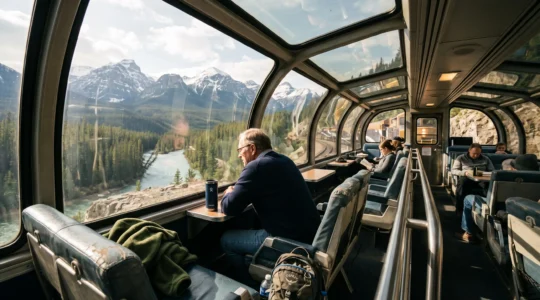
Which Scenic Train Journey in Canada Feels Worth the Ticket Price in $CAD ?
A Canadian scenic train ticket can cost a few hundred dollars or several thousand, yet the most expensive seat does not automatically deliver the best views. What matters is how much remarkable scenery passes your window during daylight, whether you…
Read more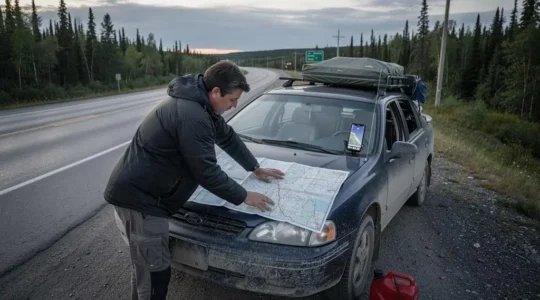
How to Plan a Cross-Canada Road Trip When 800 km Days Are Not “Normal” ?
An 800 km driving day may look reasonable on a map of Canada. On the road, it can mean hours of sustained concentration, construction delays, unpredictable weather and long distances between dependable services. Repeat that schedule across several provinces, and…
Read more