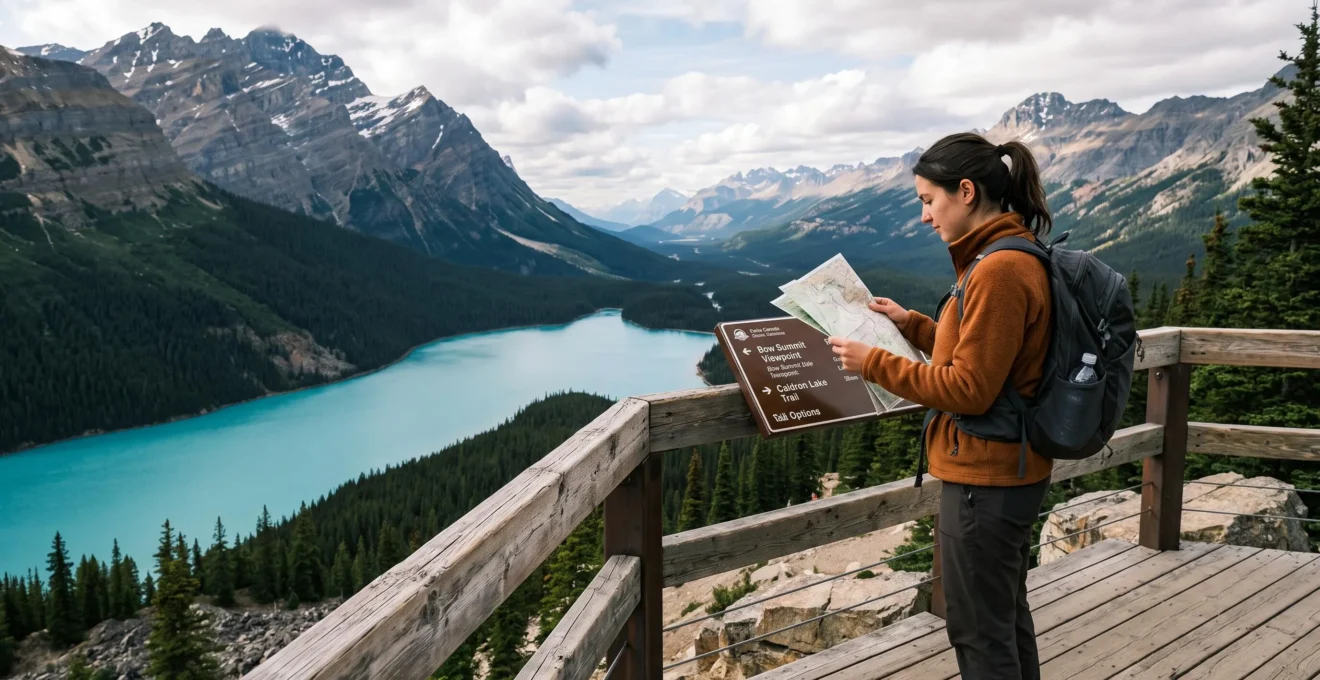
If you have only one free day to visit a UNESCO World Heritage site in Canada, the best choice is not necessarily the most famous landscape. It is the site where you can understand the heritage story, experience its defining features and return without spending most of your available time in transit.
For a compact cultural experience, the Historic District of Old Québec, Old Town Lunenburg or Head-Smashed-In Buffalo Jump can offer a focused visit. For extraordinary natural scenery, the Canadian Rocky Mountain Parks or Gros Morne National Park may be compelling, provided you choose one manageable area rather than attempt to cover the entire property.
Canada has 22 UNESCO World Heritage properties according to the supplied UNESCO country profile: 10 cultural, 11 natural and one mixed. Their immense differences in scale and accessibility make choosing wisely particularly important.
A successful one-day visit is not about seeing everything. It is about knowing what matters, selecting the experience that fits your schedule and leaving with a story you could not have learned from a photograph alone.
Canadian UNESCO sites: the one-day decision
- For cultural depth: consider Old Québec, Lunenburg or Head-Smashed-In Buffalo Jump, depending on your location and the interpretation available.
- For natural scenery: choose one accessible corridor in the Canadian Rocky Mountain Parks or Gros Morne, not an entire park itinerary.
- For limited time: plan around the key experience, operating season, travel distance and a realistic buffer before committing to a detour.
- Why Do Some UNESCO Sites in Canada Feel Underwhelming Until You Know the Story?
- How to Visit a Canadian UNESCO Site in 4 Hours Without Missing What Matters?
- Which UNESCO Experience Fits You Better in Canada: Cultural Sites or Natural Landscapes?
- The ‘Photo-Only’ Mistake That Makes UNESCO Visits Feel Like a Waste of Time
- When Should You Arrive at a Canadian UNESCO Site to Catch the Key Access Window?
- What Should You Choose in the Prairies: Grasslands, Small-Town Events, or City Museums?
- How to Plan a Half-Day Visit So a Single Free Day Actually Delivers?
- What Should You Stop For in the Canadian Prairies When It All Looks Flat at First?
Why Do Some UNESCO Sites in Canada Feel Underwhelming Until You Know the Story?
Some Canadian UNESCO sites appear visually modest because their importance lies in historical relationships, cultural practices or archaeological evidence rather than dramatic scenery. Understanding the defining story before arrival changes what you notice. A cliff, settlement or abandoned structure becomes meaningful when you recognize the people, knowledge and events connected to it.
Consider Head-Smashed-In Buffalo Jump in southwestern Alberta. At first glance, visitors encounter an expansive Prairie landscape and a cliff. Its significance becomes clearer through the evidence of Indigenous communal bison hunting and the sophisticated knowledge required to organize it.
UNESCO identifies drive lanes, stone markers, archaeological deposits, the cliff and former butchering areas as elements of the property. These features document hunting practices extending across a history of nearly 6,000 years, although that period should not be interpreted as uninterrupted activity.
The UNESCO Head-Smashed-In Buffalo Jump heritage record explains why the cultural landscape is internationally significant and describes the involvement of Blackfoot-speaking First Nations in its interpretation and management.
SGang Gwaay, another cultural World Heritage property, presents a different challenge. Its heritage cannot be reduced to the visual appearance of surviving village remains. Haida history and cultural interpretation are essential to understanding the place. Its remote island setting also makes it unsuitable as an improvised short detour.
Before visiting any culturally significant site, use a two-part decoding method:
- Identify one defining narrative. Ask what cultural practice, community history or environmental process makes this place internationally significant.
- Identify one physical anchor. Find a feature you can recognize on arrival, such as a cliff, historic street, archaeological structure or landscape boundary.
There are two common planning failures. The first is arriving without context and interpreting the site as nothing more than old buildings or open terrain. The second is assuming a visitor centre or guided program will always be available, particularly outside the main operating season.
Interpretation schedules should therefore be checked with the relevant site operator before departure. Parks Canada manages many heritage experiences, but not every UNESCO property follows the same operating system.
With only one day available, advance interpretation is not optional background reading. It is how a short visit becomes an encounter with heritage rather than a quick inspection of unfamiliar scenery.
How to Visit a Canadian UNESCO Site in 4 Hours Without Missing What Matters?
To make four hours at a Canadian UNESCO site worthwhile, concentrate on one defining feature, one meaningful physical experience and one interpretive activity. Use the first hour to orient yourself, the next two to explore a selected area and the last hour to deepen your understanding. Do not attempt to cover the entire property.
The four-hour approach works because it prioritizes depth over distance. It is an editorial planning framework, not an official UNESCO recommendation, and it assumes travel to the site has already been accounted for.
| Time | Primary objective | What to do |
|---|---|---|
| First hour | Understand the site | Find the defining feature, read the essential interpretation and confirm access conditions. |
| Next two hours | Experience the heritage | Walk one historic district, follow one appropriate trail or explore one principal area. |
| Final hour | Connect the experience to its meaning | Join available interpretation, examine exhibits or revisit the landscape with a clearer understanding. |
At a compact cultural site such as Old Québec or Lunenburg, this approach might involve historic streets, characteristic architecture and local heritage interpretation. The goal is not to enter every building. It is to understand the relationship between the built environment and the property’s inscription.
At a vast natural World Heritage property such as the Canadian Rocky Mountain Parks, the same four hours may cover only a single access corridor and short walking route.
Some experiences cannot be compressed into four hours without compromising the visit.
For example, Western Brook Pond in Gros Morne National Park requires an approximately 3 km walk from the parking area to the boat dock. Parks Canada estimates about 45 minutes for that one-way walk, followed by a boat tour lasting approximately two hours.
Those activities alone require roughly three and a half hours once an equivalent return walk is included, without allowing for waiting, parking or road travel. Visitors should not treat the boat excursion as an automatically feasible four-hour stop.
Reserve an additional 30–60 minutes where your schedule allows. This is a suggested planning buffer, not a guaranteed allowance for every tour, queue, weather event or road delay.
Your five-step one-day UNESCO planning checklist
- Choose one heritage objective. Write a one-sentence explanation of why the selected site matters.
- Select one physical anchor. Mark its exact location on your map and identify how you will reach it.
- Verify one essential experience. Save the official opening, tour or access information relevant to your date.
- Build a realistic time budget. Write down round-trip travel, activity duration and your contingency buffer.
- Define your minimum successful visit. Record one feature, one interpretive interaction and one physical experience you want to complete.
A four-hour visit is successful when you leave with a clear understanding of the property, even if large parts of its protected area remain unexplored.
Which UNESCO Experience Fits You Better in Canada: Cultural Sites or Natural Landscapes?
Choose a cultural UNESCO site if you enjoy history, architecture, storytelling and exploring places on foot. Choose a natural site if you prefer landscapes, outdoor activity and geological or ecological experiences. Your available travel time, the season and your tolerance for logistical uncertainty should decide between them more strongly than fame or photographic appeal.
The distinction matters because cultural and natural properties offer different kinds of one-day satisfaction. A historic district may allow you to explore its principal heritage features within a compact area. A national park can provide a memorable introduction while leaving most of its landscape beyond reach.
The UNESCO official list of World Heritage sites in Canada identifies the country’s inscribed properties and their cultural, natural or mixed classifications.
22
World Heritage properties in Canada in the supplied UNESCO country profile: 10 cultural, 11 natural and one mixed property. These classifications describe heritage significance, not the ease or length of a visit.
UNESCO World Heritage Centre, Canada country profile.
The following comparison concerns practical one-day travel choices rather than official visitor rankings.
| Decision factor | Cultural heritage | Natural heritage |
|---|---|---|
| Main appeal | Architecture, cultural practices, history and human relationships with place | Geology, ecosystems, scenery and outdoor exploration |
| Typical physical demands | Often manageable through walking, although individual sites vary | Can involve significant driving, trails or specialized access |
| One-day outcome | Potentially detailed understanding of a selected historic area | Usually a focused sample of a much larger landscape |
| Planning priority | Interpretation, opening hours and access to meaningful features | Weather, trail conditions, transport and seasonal activities |
| Examples | Old Québec, Lunenburg, Head-Smashed-In Buffalo Jump | Gros Morne, Canadian Rocky Mountain Parks |
Not every property fits neatly into this choice. Landscape of Grand Pré in Nova Scotia is classified by UNESCO as cultural, yet its significance is inseparable from its landscape and human history. Pimachiowin Aki, spanning parts of Manitoba and Ontario, is classified as mixed, reflecting both cultural and natural values.
These crossover examples show why classification alone cannot determine travel suitability. Pimachiowin Aki’s vast geography and access realities make it a very different proposition from a compact historic town. A one-day traveller should never assume that a meaningful landscape is automatically an easy day trip.
Ask what you would most regret missing: understanding the history of a place or spending time within an exceptional natural environment. Then evaluate whether the defining experience is genuinely accessible during your available window.
Once that choice is made, the next challenge is resisting the temptation to reduce the experience to its most recognizable photograph.
The ‘Photo-Only’ Mistake That Makes UNESCO Visits Feel Like a Waste of Time
A photo-only UNESCO visit can feel unsatisfying because a recognizable image does not explain why a place has World Heritage status. The solution is simple: take your photograph, then dedicate the remainder of your visit to an activity that reveals something the image cannot capture, such as interpretation, walking or conversation.
There is nothing wrong with photographing a spectacular mountain lake or historic street. The problem begins when reproducing a familiar composition becomes the entire purpose of the detour.
At Old Québec, a photograph of an attractive historic streetscape may preserve the appearance of the city without explaining its fortified urban heritage. At Head-Smashed-In Buffalo Jump, the cliff itself cannot communicate the full history of Plains Indigenous communal bison hunting.
The missing element is interpretation. Without it, a visitor may leave knowing what a place looks like but not why it holds international significance.
A useful correction is a three-part routine:
- Take the signature photograph early, provided the viewpoint is safely and legally accessible.
- Put the camera away for a deliberate period and focus on one non-visual element: a guide’s explanation, the sounds of the landscape, an interpretive exhibit or a careful walk.
- Before leaving, explain the site’s defining heritage value in one sentence without referring to its appearance alone.
For travellers with one free day, this also protects a scarce resource: attention. Repeatedly searching for famous camera angles can consume time that might otherwise support a guided activity or meaningful exploration.
The one-sentence test is particularly useful. If you can explain why the site was inscribed and identify evidence you encountered firsthand, your visit has achieved more than photographic recognition.
That does not mean every visitor must become a heritage expert. A single new understanding can be enough: how a community shaped a landscape, why a geological formation matters or what a historic settlement reveals about a particular period.
To make that discovery possible, the day’s timing must support access to the activities that reveal the story.
When Should You Arrive at a Canadian UNESCO Site to Catch the Key Access Window?
Arrive according to the site’s most important scheduled activity, not a universal early-morning rule. A guided departure, boat trip, seasonal visitor-centre opening or restricted access period should anchor the itinerary. Work backwards from that requirement, including road travel, parking, necessary walking and a contingency buffer before choosing your departure time.
Early arrival can help with parking and quieter exploration at busy destinations. But reaching a cultural site before interpretation services begin may leave you waiting or walking without essential context.
Mid-morning may provide better access to exhibits and guides, while potentially coinciding with greater demand during popular travel periods. Neither option is inherently best.
Western Brook Pond offers a concrete example of why access planning matters.
According to Parks Canada’s Western Brook Pond boat-tour information, the published operating season runs from approximately mid-May to mid-October. The walk to the dock takes roughly 45 minutes, the interpretive boat tour lasts about two hours and departures are subject to wind and weather conditions.
Reservations are recommended, and actual departures must be confirmed with the tour operator.
As a hypothetical planning example, suppose a reserved interpretive activity begins at 11 a.m. and requires a 45-minute approach walk. A traveller could plan to reach the trailhead well before 10:15 a.m., allowing additional time for parking, preparation and unexpected delays. This is a scheduling illustration, not an actual published departure or required check-in time.
Seasonality is equally important. A site may remain geographically accessible while its visitor services, guided activities or transport options operate only during part of the year.
Before committing, verify the following for your exact date:
- Whether the desired activity operates during that season.
- Whether reservations or advance arrangements are required.
- When access actually begins and ends.
- How long it takes to reach the activity from your parking or arrival point.
- Whether weather or other conditions could prevent participation.
Where access depends on a specific departure, work backwards from the operator’s confirmed requirements rather than relying on a general sightseeing itinerary.
A precise plan is especially valuable in the Canadian Prairies, where distances and seasonal opportunities can make alternative activities more realistic than a UNESCO visit.
What Should You Choose in the Prairies: Grasslands, Small-Town Events, or City Museums?
In the Canadian Prairies, choose Grasslands National Park for a deliberate open-landscape or dark-sky experience, a small-town event for time-specific local culture, and a city museum for accessible interpretation with less outdoor-weather exposure. If a UNESCO property requires an impractical detour, a meaningful regional experience is preferable to spending the day chasing a designation.
The Prairies challenge visitors who associate World Heritage mainly with mountains or monumental buildings. Distances are substantial, cultural landscapes may require interpretation and the most worthwhile activity may not be the nearest internationally recognized property.
However, it would be inaccurate to suggest that Prairie UNESCO heritage exists only at the Rocky Mountains’ edge. Head-Smashed-In Buffalo Jump is in Alberta, and Writing-on-Stone / Áísínai’pi is another inscribed cultural property in southern Alberta. The region therefore offers genuine World Heritage options alongside non-UNESCO destinations.
Grasslands National Park in Saskatchewan is not a UNESCO World Heritage property. Its separate Dark Sky Preserve designation was granted by the Royal Astronomical Society of Canada in 2009.
Parks Canada identifies several locations for observing the night sky, including areas accessible by vehicle. It also advises visitors to account for weather, wildlife, rugged terrain and the particular difficulties of travelling on foot after dark.
For a day that does not necessarily require a UNESCO inscription, compare the three practical choices.
| Option | What makes it worthwhile | Important constraint |
|---|---|---|
| Grasslands National Park | Prairie ecology, open landscapes and dark-sky opportunities | Remote travel, changing conditions and wildlife precautions |
| Small-town events | Local food, community traditions and seasonal culture | Specific dates, times and possible program changes |
| City museums | Curated exhibits and concentrated regional history | Opening schedules and exhibition availability |
For Grasslands, build the day around one park area rather than assuming the East and West Blocks can be visited casually together. A stargazing-focused experience requires planning into the evening and checking current conditions.
For a museum day in Regina, Saskatoon or Winnipeg, choose one principal collection or exhibition and allow time for a local meal. The advantage is concentrated interpretation, although individual opening hours and exhibit availability still need checking.
For a small-town festival or market, anchor the trip to the event’s published schedule. Since dates and arrangements can change, confirm the event close to departure and identify an indoor alternative before travelling.
The main decision is not UNESCO versus ordinary attractions. It is whether the experience delivers meaningful cultural or natural understanding within the time genuinely available.
That principle also applies when your free day is fragmented, leaving only a few usable hours for the heritage experience itself.
How to Plan a Half-Day Visit So a Single Free Day Actually Delivers?
Plan a half-day heritage visit around the total round trip, not just the time spent on site. If your free day includes work, family obligations or a long drive, select one core experience and divide your available time according to access requirements. Prepare a shorter version of the visit before weather, traffic or fatigue forces a decision.
A half-day plan is most effective when it distinguishes the non-negotiable experience from optional additions.
For a compact historic district, that might mean a selected walking route and one interpretive stop. For a natural site, it could mean one easily accessible viewpoint and a short, appropriate trail rather than a distant destination requiring additional transport.
The central calculation is straightforward: available time minus return travel, essential access time and contingency allowance equals the time realistically available for exploration.
Consider a hypothetical eight-hour free day with three hours of total road travel and one hour reserved for delays, meals and basic logistics. Only four hours remain for the site itself. This example illustrates a planning method; it does not describe a particular Canadian UNESCO property’s travel conditions.
When two separate windows are available, use them according to site conditions rather than splitting the experience mechanically.
- Earlier window: prioritize a suitable walk, landscape exploration or outdoor feature if access and safety conditions permit.
- Later window: prioritize interpretation or exhibits if their published operating hours align with your availability.
This division will not work for every site. A reserved boat trip, guided visit or fixed-time experience may require one uninterrupted block. In those cases, the activity’s confirmed schedule takes priority over an ideal morning-and-afternoon split.
Before leaving, identify two optional elements that can be removed without undermining the visit. These might be a secondary viewpoint, extra shopping time or an additional short walk.
That cut-list prevents an unexpected delay from turning an otherwise worthwhile experience into a race against the clock.
When even that compressed schedule is impractical, the right choice may be a meaningful stop along your existing route rather than a separate heritage excursion.
Key takeaways before choosing your final stop
- Measure the round-trip detour before deciding that a site or attraction fits your free day.
- Choose destinations that provide a recognizable landscape feature, a compelling story or a genuine local cultural encounter.
- Prefer a few substantial experiences to numerous short stops that leave little time for understanding.
What Should You Stop For in the Canadian Prairies When It All Looks Flat at First?
In the Canadian Prairies, stop where the landscape changes, where a specific story becomes visible or where local culture offers a meaningful experience. River valleys, coulees, badland formations, Indigenous heritage places and historic communities often reward more attention than anonymous roadside viewpoints. With one free day, choose fewer stops and give each enough time to register.
The Prairie landscape can look uniform from a moving vehicle, particularly to travellers accustomed to mountains, coastlines or densely built cities. Yet the region contains important differences in terrain, ecology and cultural history.
The challenge is learning where to look.
A coulee or river valley interrupts the apparent flatness and can reveal the processes that shaped the land. A historic town or interpretive centre may explain settlement patterns, transportation or community life. Indigenous heritage places can communicate relationships with the land extending far beyond what is immediately visible.
To select stops on a one-day drive, apply a simple three-part filter. Each destination should offer at least one of these qualities:
- A distinctive landform: a valley, coulee, badland edge or other landscape feature that rewards observation.
- A specific story: a historic site, interpreted cultural landscape or community heritage experience.
- A local encounter: a regional food experience, community attraction or scheduled cultural activity.
If a proposed stop offers none of these, it may not justify leaving your main route.
Head-Smashed-In Buffalo Jump demonstrates how a landscape that appears visually restrained can hold extensive cultural significance. But it also demonstrates why a UNESCO inscription should be supported by interpretation, rather than treated as a reason to collect another photograph.
Grasslands National Park offers a different kind of experience. Its value lies in spending time with the Prairie environment, not assuming every minute will produce a dramatic new viewpoint.
For travellers continuing across the region, a practical rhythm is to choose a small number of substantial stops. Three meaningful experiences can be more rewarding than eight brief roadside pauses, provided their locations and travel times actually fit the route.
A possible day might combine one landscape feature, one interpreted historic or cultural site and one local meal. This is a flexible itinerary template, not a claim that these experiences are always close together.
Keep access, weather and available daylight central to the decision. Remote Prairie roads, unfamiliar terrain and wildlife require preparation, especially when an outdoor stop extends toward dusk or darkness.
Choose the stop whose meaning you can realistically discover in the time available. Check its operating arrangements, map the return journey and commit to one memorable experience instead of an ambitious collection of detours. A worthwhile Canadian heritage day does not require visiting every landmark—or even a UNESCO plaque.
Can you visit a Canadian UNESCO World Heritage site without a guided tour?
Some UNESCO properties have areas that can be explored independently, but access arrangements vary by destination. A self-guided visit can still be meaningful if you read the official heritage description and use available interpretation. Remote, protected or access-controlled areas may require advance arrangements or organized activities. Check the specific site’s visitor information before travelling.
Does UNESCO World Heritage status guarantee a visitor centre or public access?
No. World Heritage inscription recognizes the outstanding universal value of a property; it does not guarantee unrestricted public access, year-round visitor services or a particular level of tourism infrastructure. Some properties cover remote or culturally sensitive landscapes, making access planning essential.
Is a four-hour UNESCO visit enough for families with children?
Four hours may work well at a compact site with accessible walking routes and age-appropriate interpretation. For larger national parks, account for children’s walking abilities, food breaks, weather and transport. Choose one core activity and avoid scheduling so tightly that ordinary family needs make the visit difficult.
What should you do if the main UNESCO experience is cancelled because of weather?
Use a prepared alternative that does not depend on the same weather-sensitive access. For example, a cancelled boat departure might lead to a different accessible park experience if conditions permit. Verify current restrictions before changing plans, and never assume a trail or viewpoint remains safe simply because it is accessible.
Is Grasslands National Park a UNESCO World Heritage site?
No. Grasslands National Park in Saskatchewan is not listed among Canada’s inscribed UNESCO World Heritage properties in the supplied official country profile. It is a Dark Sky Preserve designated by the Royal Astronomical Society of Canada in 2009. That separate recognition supports its appeal for stargazing, but it should not be confused with World Heritage status.